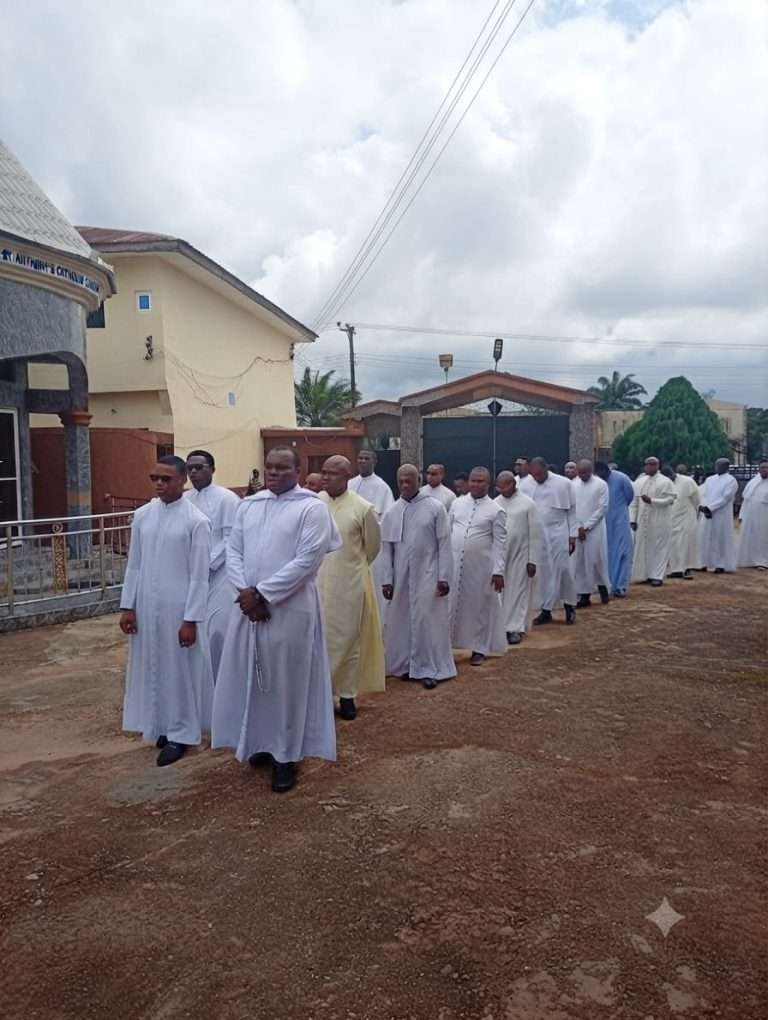
On the 2nd of September 2026, Holy Trinity Cathedral Parish, Orlu, was graced with the presence of the Bishops and Priests of the Catholic Diocese of Orlu, who gathered for their monthly priestly recollection. It was a sacred moment of prayer, fraternity, and spiritual renewal.
During the spiritual conference, Fr. Remigius Anyadioha delivered a profound and spiritually enriching reflection on the theme, “The Spirituality of the Diocesan Priest: Finding God in Daily Pastoral Life.” A fruitful journey through Pastore Dabo Vobis, The Directory on the Ministry and Life of Priests, and Canons 265-298 of the Code of Canon Law, exploring the spirituality, identity, ministry, and life of the diocesan priest.
These documents, in relation to our topic of discourse, affirm that the diocesan priest is called to live among the people of God and to cultivate a deep and filial relationship with them. Events of everyday culminate on how we experience God and we (Priests) are sanctified by the work we do. Priest does not have a calling apart from the people of God whom he serves. Notwithstanding, he is in the world but not of the world (Jn 17). Thus, he must set mature boundaries, being an “altar Christus”.
The priest must have accountability as part of his major characteristics. He must represent the Church with integrity. This scope of accountability cut across the bishop and the entire people of God. This does not suggest being “navigated by people’s opinion but being steadfast in the church’s teaching. The priest also owes accountability to his brother priest, based on the facticity of “Corporate image” of the Catholic Priesthood. The priest’s expense of celibacy is also unique. This is why he needs his brother priests.
Therefore, diocesan priest, first, a human being who is no better than the lay brothers, but he is consecrated solely to God’s service. Priest who teaches people how to pray is also a man of prayer. That is why people often accost him with their prayer requests. Thus, his ministry when adorned in prayer becomes nourished and effective. Ministry without prayer is “social work”. In conclusion, God’s presence is always with him when he lives according to his vocation as a priest.