
History
History of the Catholic Church in Orlu Diocese
The history of the Catholic Diocese of Orlu is a story of faith, sacrifice, evangelization, and pastoral growth. From its early missionary roots to its establishment as a diocese, the Church in Orlu has grown through the dedication of missionaries, indigenous clergy, religious men and women, catechists, and the faithful laity. Under the patronage of the Most Holy Trinity, the Diocese continues to witness to the Gospel through worship, education, service, and communion.
Early Beginnings: 1910-1980
The Catholic Church in Orlu Diocese traces its roots to Onitsha, by the River Niger. In December 1905, a team of four missionaries sowed the seed of the Catholic faith, which eventually spread like the mustard seed to many parts of Eastern Nigeria. Through the dedicated efforts of Rev. Fr. Shanahan, the Catholic faith made a significant advance into the hinterlands east of the Niger. He established mission centers at Ozubulu in 1907, Nteje in 1909, Eke in 1910, and Emekuku in 1912.
From his administrative center in Onitsha, Fr. Shanahan occasionally traveled extensively to these mission centers and beyond, reaching places such as Okija and Uli, as noted in reports of the time. These mission centers gradually extended their influence and made contact with communities in what is now the Catholic Diocese of Orlu. Some of these communities trace their first contact with the Catholic faith to approximate dates such as Amiri in 1910, Uli in 1912, and Amaigbo in 1919. The missionaries who laid much of this early groundwork included Fr. Bindel at Ozubulu and Fr. Buberndorf at Nteje.
The first resident priest is said to have settled in Akokwa in 1936. However, records show that the first parish established in the Orlu area was St. Gregory’s Parish, Amaigbo, in 1937, with Fr. D. Hackett as parish priest. In the same year, St. Michael’s Parish, Urualla, was created, with Fr. Faley as parish priest. These were followed by St. Mary’s Parish, Umuaka, in 1946, and St. Theresa’s Parish, Uli, in 1948. Each of these early parishes served several catechist stations.
The Journey of Faith through Owerri
In 1948, the Diocese of Owerri was created, and Orlu came under its jurisdiction. The acceptance of the Catholic faith in the region was not without some resistance from indigenous culture in the early years. As Nwabueze notes in The Church in Mgbidi, some elders accepted the Catholic religion but remained cautious. They did not immediately abandon the ọfọ, their traditional symbol of worship, status, genealogy, and inheritance. While they allowed their children to embrace the new faith, many still held on to traditional practices.
In St. Theresa’s region, for instance, and in places such as Uli, Eke was held in deep traditional regard. The Urashi, Njaba, Obana, and Nwangele rivers were also associated with traditional deities in the areas through which they flowed. As a result, tensions sometimes arose between the early Christians of Orlu and adherents of traditional religion.
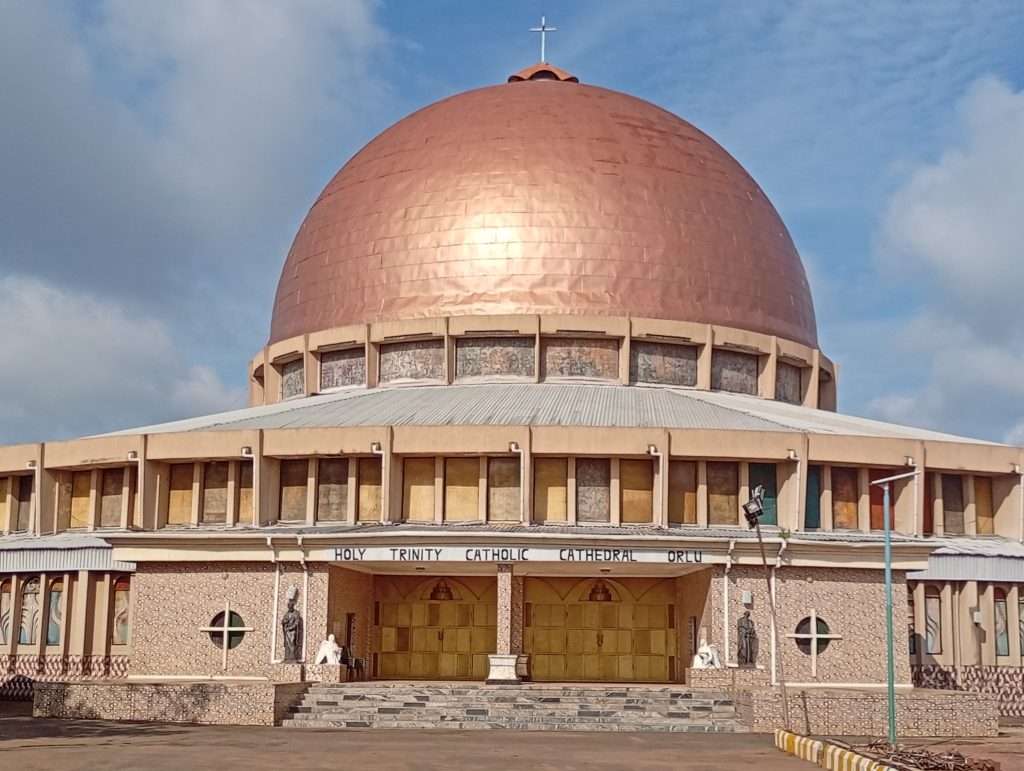
From 1948 to 1966, the Catholic Church in Orlu continued to expand and deepen its roots. Twelve new parishes were created during this period: Holy Trinity Parish, Orlu, in 1953; Regina Pacis Parish, Ihioma, in 1954; St. Patrick’s Parish, Awo-Omamma, in 1958; Umuna, Umuma, and Isiekenesi in 1960; St. Paul’s Parish, Amiri, in 1961; Mbato and Umuowa in 1962; Isu in 1964; and Akatta and Akokwa in 1965. During this period, most of the missionaries were foreign priests, while indigenous clergy gradually began to emerge, including Msgr. A. Aghaizu and Msgr. Mba in 1959.
Growth in Vocations
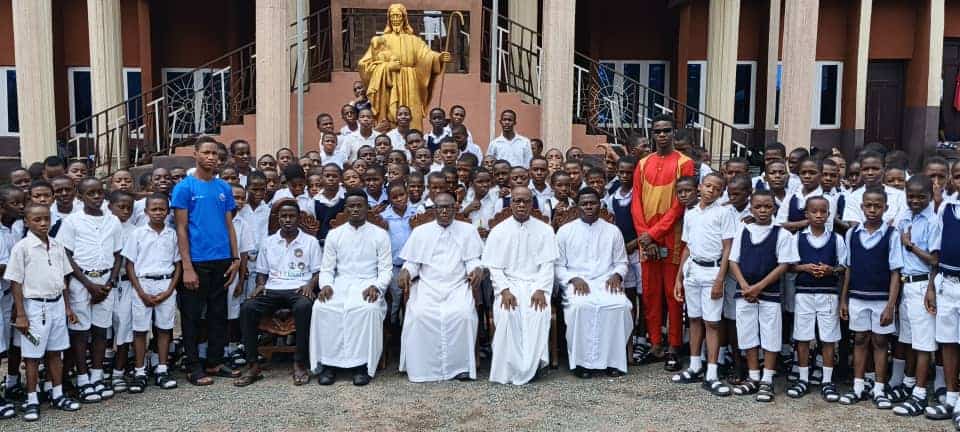
One of the most effective methods of evangelization adopted by the missionaries was the building of schools. These schools formed young people in knowledge and character and became important centers of Christian formation. To promote vocations to the priesthood, St. Mary’s Seminary, Umuowa, was established in 1961 as a feeder seminary to St. Peter Claver’s Seminary, Okpala. As a result, the number of indigenous priests grew from five to thirty-two. Religious vocations also increased, with the Immaculate Heart Sisters becoming especially prominent in number.
By God’s grace, Orlu was relatively spared from some of the devastating effects of the Nigeria-Biafra War. Many institutions, including churches and schools, took refuge in Orlu. Okporo, which began as a refugee camp, later developed into what is now St. Damian’s Hospital, Okporo. Awo-Omamma also became an important center for the Holy Ghost Fathers and Brothers, and priestly and diaconate ordinations later took place there for the congregation.
The movement of people into Orlu during and after the war also brought other Christian denominations, including Pentecostal groups, into an area that had been predominantly Catholic. Nevertheless, the Catholic Church continued to grow, evangelize, and consolidate the faith. The Nigeria-Biafra War of 1966–1970 affected Catholic churches and schools severely and led to the departure of many foreign priests. This development placed greater responsibility on indigenous clergy and religious, who rose to the challenges of evangelization.
Development and Consolidation: 1967-1980
In 1967, Orlu and Mbaise were made deaneries under the Diocese of Owerri, now the Archdiocese of Owerri. This deanery period may rightly be described as a time of development and consolidation. Rt. Rev. Mark Unegbu, Bishop of Owerri, oversaw the new deanery, while Rev. Fr. Lawrence Deyce, C.S.Sp., served as dean. Fr. Deyce effectively organized the deanery and prepared it for its eventual transformation into a diocese.
During this period, six new parishes were added to the existing seventeen, bringing the total number of parishes to twenty-three. These new parishes were Awo-Idemili in 1967, Ihitenansa in 1973, Nkwerre in 1974, Mgbidi in 1976, Attanze in 1978, and Obibi-Ochasi in 1978.
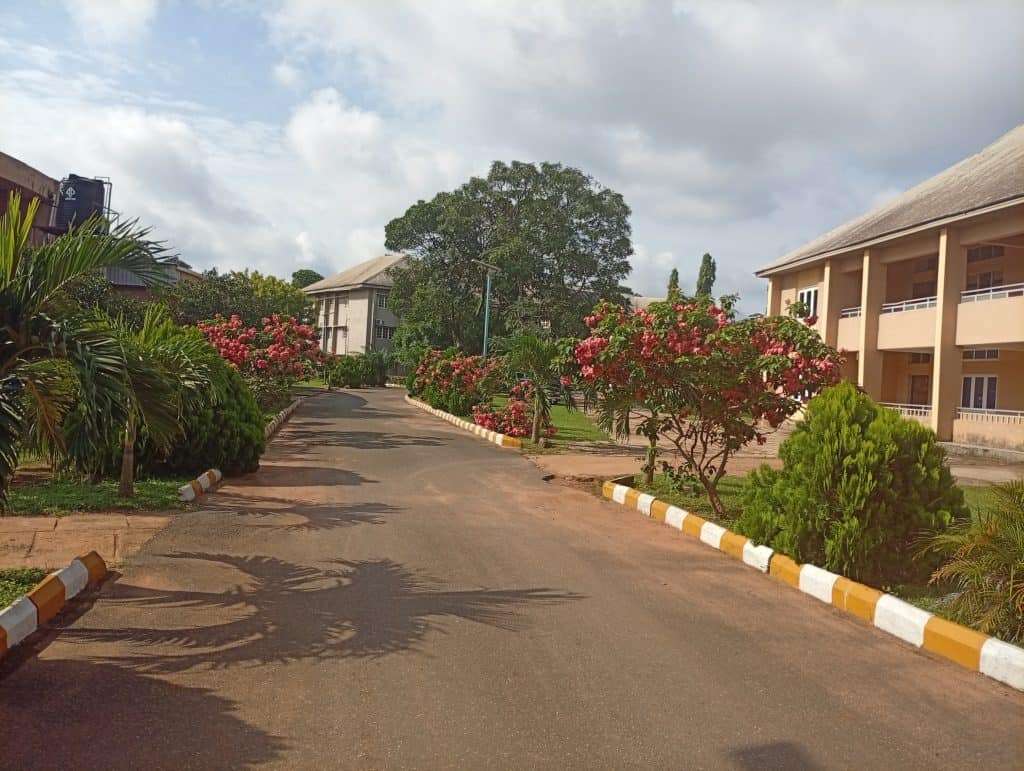
 Bishops House Orlu, Secratariat Avenue
- Entrance Gate of Holy Trinity Cathedral
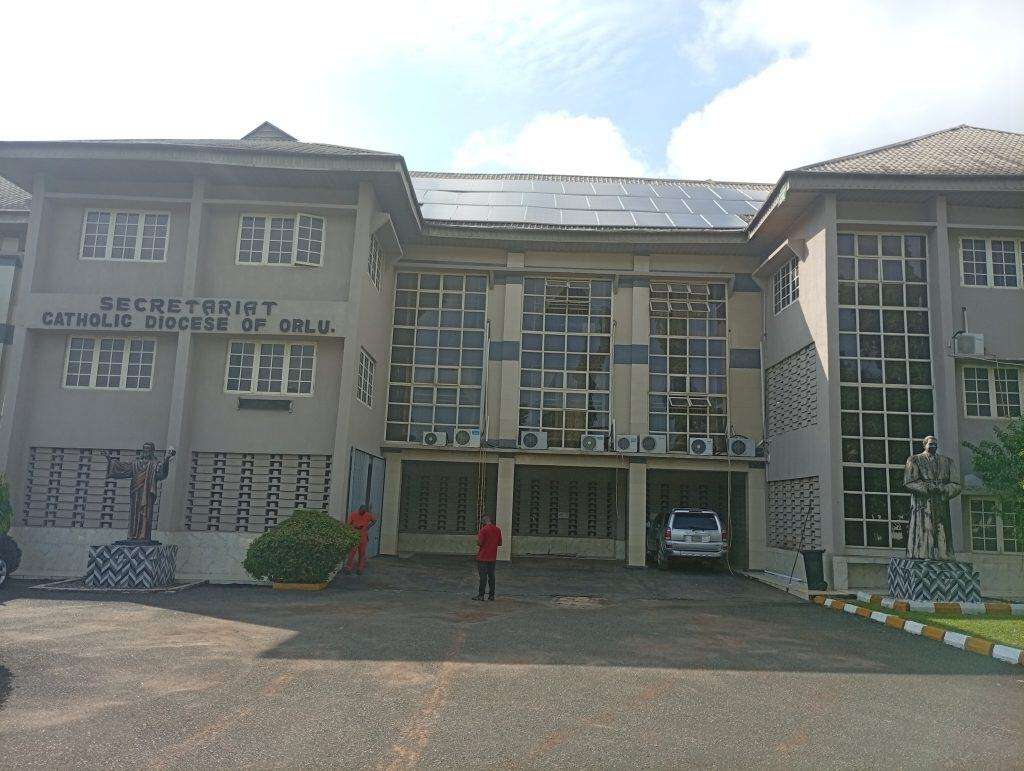
- Front View of the Secretariat of the Catholic Diocese of Orlu

Orlu as a Diocese: 1981 to the Present
A historic moment came on November 29, 1980, when His Holiness Pope John Paul II raised Orlu to the status of a diocese. On January 6, 1981, he consecrated His Lordship, Most Rev. Dr. Gregory Obinna Ochiagha, as the first Bishop of the Catholic Diocese of Orlu. The diocese was formally inaugurated on February 15, 1981, with the Most Holy Trinity instituted as its patron.
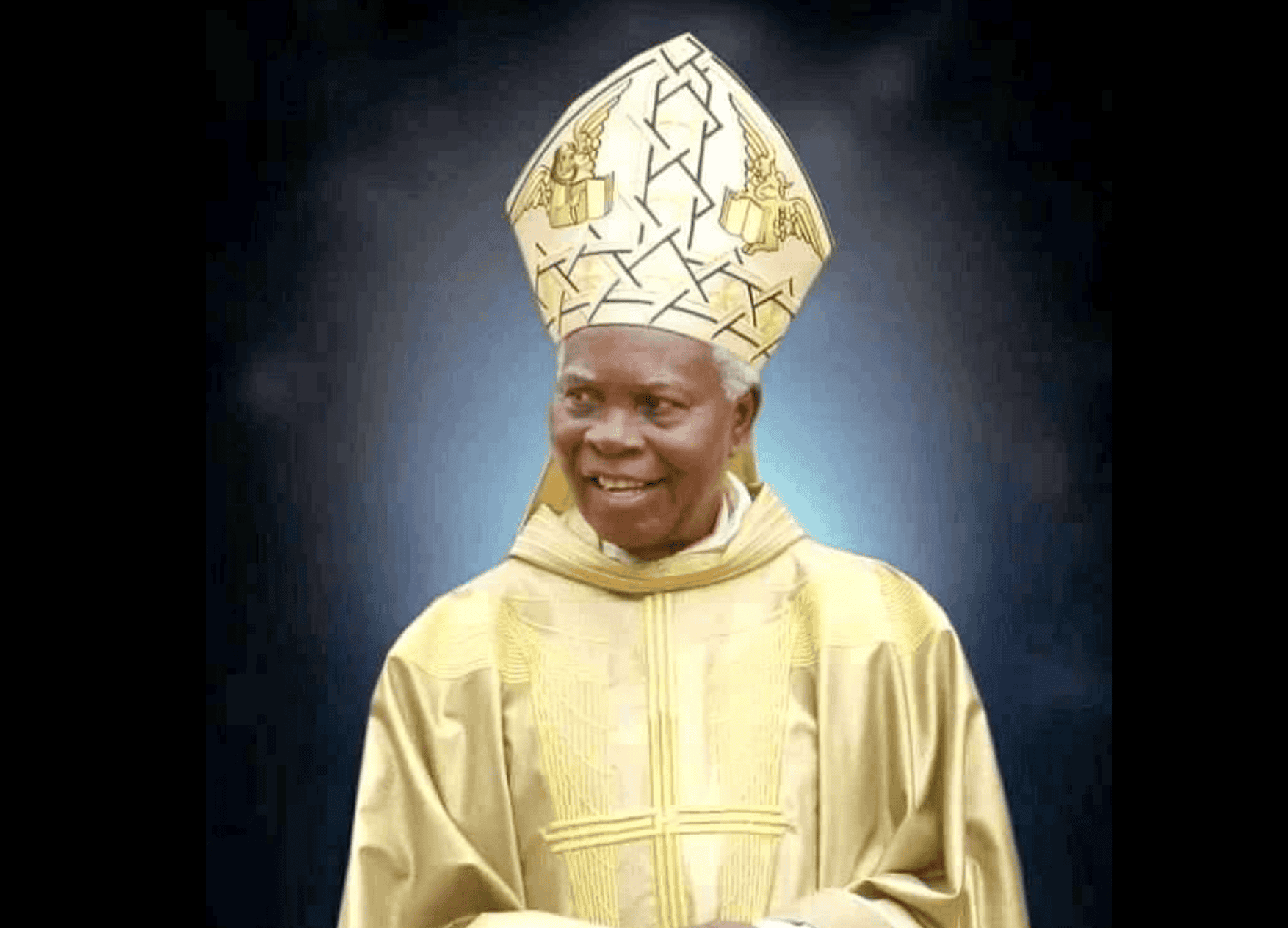
At its inauguration, Orlu Diocese had twenty-three parishes. Within the first ten months of its existence, Bishop Ochiagha erected three new parishes: St. John’s Parish, Umuobom; St. Patrick’s Parish, Amucha; and Sacred Heart Parish, Orsuihiteukwa. By its tenth anniversary, the diocese had grown to fifty parishes.
To the glory of God, the Diocese of Orlu has continued to grow remarkably. It now has 197 parishes and four chaplaincies, with 476 priests, five religious brothers, 161 religious sisters, 120 senior seminarians, and 651 junior seminarians serving the work of evangelization among more than one million Catholics within an estimated population of 1,325,115 people in the diocesan territory. The diocese is also blessed with Porta Caeli Cistercian Monastery, established on March 10, 2007. These statistics do not include the sixty priests who have gone before us marked with the sign of faith. May they rest in peace. Amen.
For effective pastoral administration, the Diocese of Orlu created four zones or deaneries, now known as Pastoral Regions: St. Gregory’s Pastoral Region, St. Michael’s Pastoral Region, St. Theresa’s Pastoral Region, and Regina Pacis Pastoral Region. Each Pastoral Region has a dean who coordinates pastoral ministry within the region.
Another important milestone in the life of the diocese was the inauguration of the first Diocesan Synod, held from November 22 to 27, 1999. On December 6, 2000, His Excellency Archbishop Padilla, then Apostolic Nuncio to Nigeria, solemnly dedicated the Cathedral to the Most Holy Trinity. On February 18, 2006, the Catholic Diocese of Orlu celebrated its Silver Jubilee in the presence of His Excellency Archbishop Renzo Fratini, then Apostolic Nuncio to Nigeria.
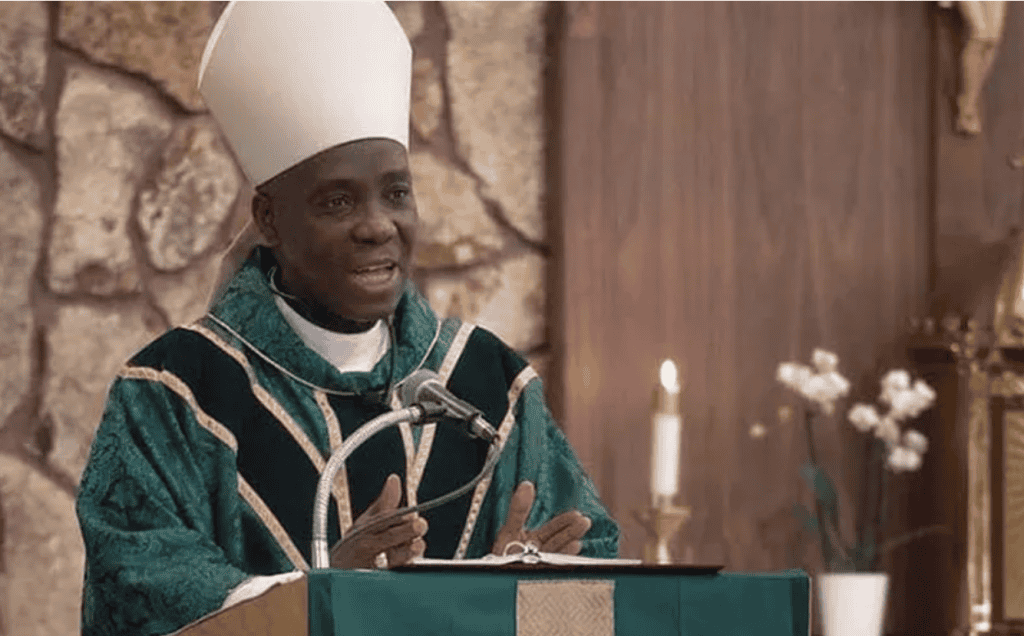
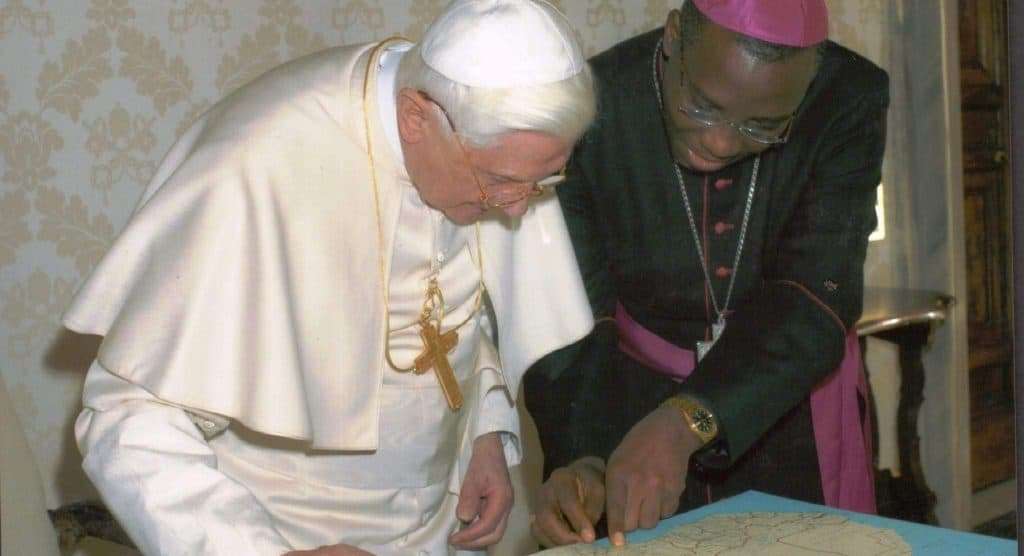
The diocese rejoiced again when Rev. Dr. Augustine Tochukwu Ukwuoma was appointed Bishop of Orlu by His Holiness Pope Benedict XVI. He was ordained and installed as Bishop of Orlu on June 21, 2008, succeeding Most Rev. Gregory Ochiagha, who retired after twenty-seven years of faithful service. Under Bishop Ukwuoma’s leadership, the diocese has continued to witness the creation of new parishes, growth in priestly vocations, the contribution of religious men and women, and the active support of the laity.
 Bishop Augustine Ukwuoma, the current bishop of the Catholic Diocese of Orlu
- Bishop Augustine Ukwuoma Shwowing Pope Benedict XVI the map of Catholic Diocese of Orlu
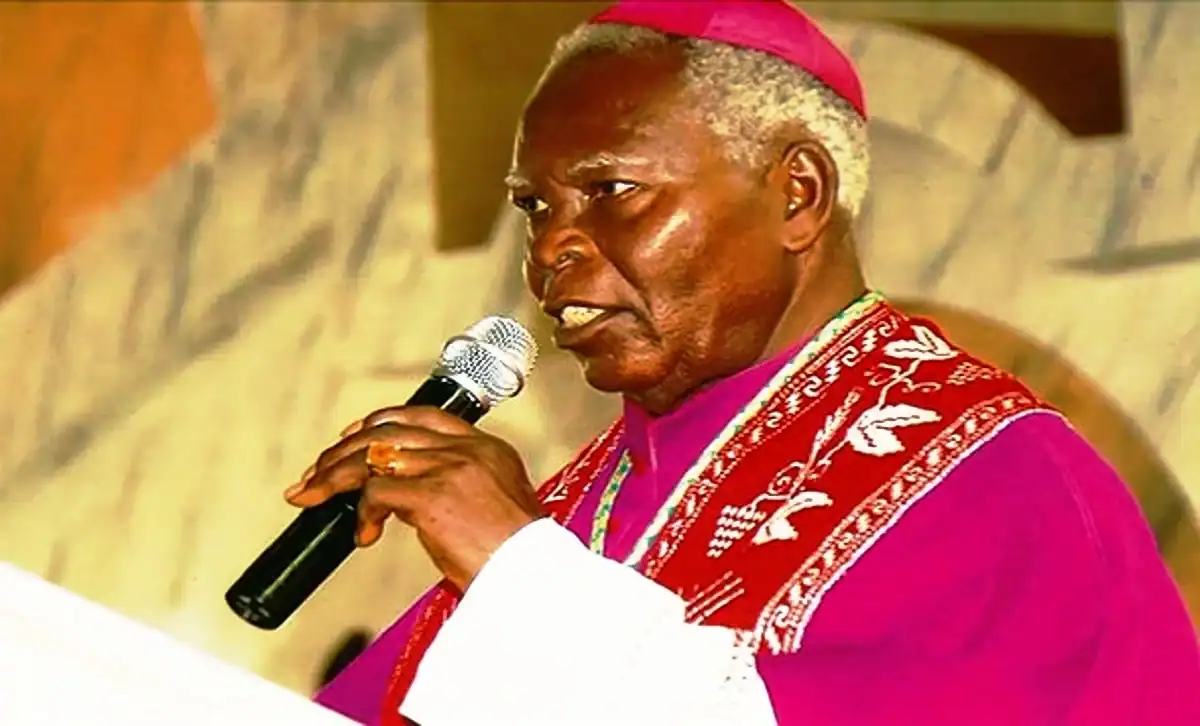
Another historic moment came when His Holiness Pope Francis appointed Most Rev. Thomas Ifeanyichukwu Obiatuegwu as Auxiliary Bishop of Orlu. With gratitude to God, the diocese witnessed his episcopal consecration on March 20, 2024, under the pontificate of Pope Francis.
From its missionary beginnings to its present maturity, the Catholic Diocese of Orlu remains a living testimony of faith, sacrifice, evangelization, and pastoral growth under the patronage of the Most Holy Trinity.