Home
Welcome to the official website of the Catholic Diocese of Orlu in Nigeria. You will find necessary information about our diocese and her apostolates as a Local Church. The Primary Menu above provides you with different links to different functions and locations.Learn More
Pastoral Visit Schedules
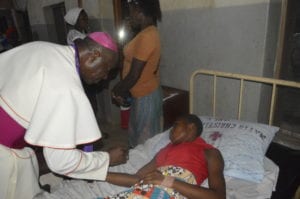
Most weekends of the year, the bishop travels to parishes and institutions to oversee the people of God under his pastoral care. It is a wonderful time to have a one-on-one interaction with the bishop and be inspired in the mutual work of bearing witness to Christ.Learn More 
Health Services
Orlu diocese is actively involved in providing affordable health care services to our population. There are a number of hospitals across the different regions of the diocese where you will receive a good medical attention that is affordable.Learn More
Diocesan News and Updates

NNAOMA Merit Award, 2026![]()
![]() The Catholic Diocese of Orlu once again witnessed a remarkable occasion with the conferment of the NNAOMA Merit Award, a prestigious honor recognizing outstanding commitment, faith, and service within the Church.
The Catholic Diocese of Orlu once again witnessed a remarkable occasion with the conferment of the NNAOMA Merit Award, a prestigious honor recognizing outstanding commitment, faith, and service within the Church.![]()
![]() To ensure proper organization and crowd control, the event was scheduled across two consecutive Saturdays. The first ceremony was held on 16th May 2026 for the Regina Pacis and St. Michael’s Pastoral Regions, while the second ceremony for St. Gregory and St. Theresa’s Regions took place on 23rd May 2026.
To ensure proper organization and crowd control, the event was scheduled across two consecutive Saturdays. The first ceremony was held on 16th May 2026 for the Regina Pacis and St. Michael’s Pastoral Regions, while the second ceremony for St. Gregory and St. Theresa’s Regions took place on 23rd May 2026.![]()
![]() The ceremonies gathered a large assembly of the faithful in the presence of the Principal Bishop of the Diocese, Most Rev. Augustine Ukwuoma, alongside priests and religious of the Diocese. The Holy Mass was presided over by the Auxiliary Bishop, Most Rev. Thomas Obiatuegwu.
The ceremonies gathered a large assembly of the faithful in the presence of the Principal Bishop of the Diocese, Most Rev. Augustine Ukwuoma, alongside priests and religious of the Diocese. The Holy Mass was presided over by the Auxiliary Bishop, Most Rev. Thomas Obiatuegwu.![]()
![]() During his homily, the Auxiliary Bishop reflected on the Igbo cultural tradition of recognizing individuals who distinguish themselves through virtue and excellence. He noted that although such noble practices have diminished in society today, the Church has continued the tradition by conferring honors on faithful Christians who demonstrate exemplary character and unwavering commitment to the Church. It is from this vision that titles such as Knighthood, Nnaoma, Nneoma, Ezinma, and Ezinne emerged.
During his homily, the Auxiliary Bishop reflected on the Igbo cultural tradition of recognizing individuals who distinguish themselves through virtue and excellence. He noted that although such noble practices have diminished in society today, the Church has continued the tradition by conferring honors on faithful Christians who demonstrate exemplary character and unwavering commitment to the Church. It is from this vision that titles such as Knighthood, Nnaoma, Nneoma, Ezinma, and Ezinne emerged.![]()
![]() Speaking particularly about fathers, he described St. Joseph as the perfect model of Christian fatherhood and the patron of all Nnaoma dị Ebube. St. Joseph, he explained, was a just and obedient man whose life exemplified humility, responsibility, and attentiveness to God’s will. Fathers were therefore encouraged to imitate his devotion and leadership in family life. He also referenced the biblical figure Job, emphasizing the spiritual and intercessory role fathers must play within their families.
Speaking particularly about fathers, he described St. Joseph as the perfect model of Christian fatherhood and the patron of all Nnaoma dị Ebube. St. Joseph, he explained, was a just and obedient man whose life exemplified humility, responsibility, and attentiveness to God’s will. Fathers were therefore encouraged to imitate his devotion and leadership in family life. He also referenced the biblical figure Job, emphasizing the spiritual and intercessory role fathers must play within their families.![]()
![]() In his address, the Diocesan CMO President, Nnaoma Comrade ThankGod Zimako, stated that NNAOMA DI EBUBE remains the highest title conferred by the Orlu Diocesan CMO on deserving men who have contributed significantly to the growth of the Catholic faith and the Church. According to him, the award is bestowed solely through the authority of the Bishop, making it highly honorable and prestigious.
In his address, the Diocesan CMO President, Nnaoma Comrade ThankGod Zimako, stated that NNAOMA DI EBUBE remains the highest title conferred by the Orlu Diocesan CMO on deserving men who have contributed significantly to the growth of the Catholic faith and the Church. According to him, the award is bestowed solely through the authority of the Bishop, making it highly honorable and prestigious.![]()
![]() Beyond social recognition, he stressed that the award carries profound spiritual responsibilities. Recipients are expected to live exemplary lives worthy of the honor bestowed upon them. Referring to the Igbo proverb, “Onye a na-ele ele anaghị atụ na ntụ,” he reminded awardees that public recognition demands greater moral integrity and accountability.
Beyond social recognition, he stressed that the award carries profound spiritual responsibilities. Recipients are expected to live exemplary lives worthy of the honor bestowed upon them. Referring to the Igbo proverb, “Onye a na-ele ele anaghị atụ na ntụ,” he reminded awardees that public recognition demands greater moral integrity and accountability.![]()
![]() Quoting from page 104 of the Bishop’s 2025 Lenten Pastoral Letter, he further explained that honorific titles are not intended to canonize individuals or portray them as perfect. Rather, even though they are called “Merit Awards,” every merit ultimately comes through God’s grace. Those who receive such titles should therefore see them not as proof of perfection, but as a call to continually embody the virtues and values the titles represent.
Quoting from page 104 of the Bishop’s 2025 Lenten Pastoral Letter, he further explained that honorific titles are not intended to canonize individuals or portray them as perfect. Rather, even though they are called “Merit Awards,” every merit ultimately comes through God’s grace. Those who receive such titles should therefore see them not as proof of perfection, but as a call to continually embody the virtues and values the titles represent.
📜 SEMINAR REPORT: AGRICULTURAL EMPOWERMENT PROGRAMME FOR CATHOLIC PRIESTS IN IMO STATE![]() **Theme:** *"Empowering the Church Through Sustainable Agriculture, Agribusiness and Community Economic Development"*
**Theme:** *"Empowering the Church Through Sustainable Agriculture, Agribusiness and Community Economic Development"*![]() **Sponsor:** Powered by the **Goodlight Foundation (GLF)** – Sir Stanley Amuchie
**Sponsor:** Powered by the **Goodlight Foundation (GLF)** – Sir Stanley Amuchie![]()
![]() **Target Audience:** Catholic Priests in Imo State, Nigeria
**Target Audience:** Catholic Priests in Imo State, Nigeria![]() 🌟 Overview & Context
🌟 Overview & Context![]() In response to Nigeria’s pressing economic challenges—including inflation, high food prices, and youth unemployment—this intensive one-day training was organized to equip the clergy. The core message is clear: **Agriculture is no longer just a traditional subsistence activity; it is a highly organized, strategic modern business** capable of driving economic transformation and parish self-reliance.
In response to Nigeria’s pressing economic challenges—including inflation, high food prices, and youth unemployment—this intensive one-day training was organized to equip the clergy. The core message is clear: **Agriculture is no longer just a traditional subsistence activity; it is a highly organized, strategic modern business** capable of driving economic transformation and parish self-reliance.![]()
![]() 🎯 Key Seminar Objectives
🎯 Key Seminar Objectives![]() * **Expose Clergy to Agribusiness:** Introducing priests to profitable ventures in modern crop cultivation, livestock production, and apiary farming.
* **Expose Clergy to Agribusiness:** Introducing priests to profitable ventures in modern crop cultivation, livestock production, and apiary farming.![]()
![]() * **Parish-Based Food Production:** Encouraging the establishment of community farms and agricultural projects within parishes and dioceses.
* **Parish-Based Food Production:** Encouraging the establishment of community farms and agricultural projects within parishes and dioceses.![]()
![]() * **Knowledge Transfer:** Equipping priests with practical agricultural and financial insights to mentor youth groups and parishioners.
* **Knowledge Transfer:** Equipping priests with practical agricultural and financial insights to mentor youth groups and parishioners.![]()
![]() * **Collective Wealth:** Promoting the formation of parish-based agricultural cooperatives to pool resources and access financing.
* **Collective Wealth:** Promoting the formation of parish-based agricultural cooperatives to pool resources and access financing.![]()
![]() 📚 Core Modules Covered
📚 Core Modules Covered![]() **1. Modern Agribusiness & Sustainable Crop Production**
**1. Modern Agribusiness & Sustainable Crop Production**![]() * **Value-Crop Focus:** Highlighting lucrative opportunities in Imo State for cultivating Cassava (for garri/starch), Maize (high poultry feed demand), Yam, Plantain, and quick-income Vegetables.
* **Value-Crop Focus:** Highlighting lucrative opportunities in Imo State for cultivating Cassava (for garri/starch), Maize (high poultry feed demand), Yam, Plantain, and quick-income Vegetables.![]() * **Climate-Smart Farming:** Embracing organic farming (composting, crop rotation) and simple irrigation systems to ensure profitable, year-round harvesting.
* **Climate-Smart Farming:** Embracing organic farming (composting, crop rotation) and simple irrigation systems to ensure profitable, year-round harvesting.![]()
![]() **2. Livestock Production, Aquaculture & Apiary**
**2. Livestock Production, Aquaculture & Apiary**![]() * **Animal Protein Ventures:** Practical steps for managing Broiler/Layer Poultry, fast-reproducing Pig farms, and low-capital Goat rearing.
* **Animal Protein Ventures:** Practical steps for managing Broiler/Layer Poultry, fast-reproducing Pig farms, and low-capital Goat rearing.![]() * **Fish & Honey Farming:** Exploiting the high demand for Catfish and the often-overlooked, highly profitable market for branded Honey and beeswax.
* **Fish & Honey Farming:** Exploiting the high demand for Catfish and the often-overlooked, highly profitable market for branded Honey and beeswax.![]()
![]() **3. Value Chain & Technology**
**3. Value Chain & Technology**![]() * **Value Addition:** Processing raw crops (e.g., cassava into packaged flour, smoking fish) to increase profit margins and minimize post-harvest losses.
* **Value Addition:** Processing raw crops (e.g., cassava into packaged flour, smoking fish) to increase profit margins and minimize post-harvest losses.![]() * **Tech Tools:** Utilizing mobile tools for real-time market pricing, weather updates, and buyer networks.
* **Tech Tools:** Utilizing mobile tools for real-time market pricing, weather updates, and buyer networks.![]()
![]() **4. Financial Literacy & Agripreneurship**
**4. Financial Literacy & Agripreneurship**![]() * **Business Discipline:** Treating agriculture as a business enterprise by implementing strict record-keeping (tracking expenses/sales) and budgeting.
* **Business Discipline:** Treating agriculture as a business enterprise by implementing strict record-keeping (tracking expenses/sales) and budgeting.![]() * **Financing Responsibly:** Leveraging agricultural development banks, grants, and cooperatives while avoiding unstructured, risky loans.
* **Financing Responsibly:** Leveraging agricultural development banks, grants, and cooperatives while avoiding unstructured, risky loans.![]()
![]() ⛪ The Strategic Role of the Church
⛪ The Strategic Role of the Church![]() The Church is uniquely positioned to lead this agricultural revolution because of its **leadership structures, community trust, vast land resources, and vibrant youth networks**. By establishing parish-based cooperatives, the Church can effectively drive youth and women empowerment, moving communities from dependency toward productivity and self-reliance.
The Church is uniquely positioned to lead this agricultural revolution because of its **leadership structures, community trust, vast land resources, and vibrant youth networks**. By establishing parish-based cooperatives, the Church can effectively drive youth and women empowerment, moving communities from dependency toward productivity and self-reliance.![]() 🚀 Actionable Recommendations for Brother Priests
🚀 Actionable Recommendations for Brother Priests![]() 1. **Start Small, Think Long-Term:** Begin with manageable parish pilot projects (e.g., a small poultry, fishery, or vegetable garden) and reinvest profits strategically.
1. **Start Small, Think Long-Term:** Begin with manageable parish pilot projects (e.g., a small poultry, fishery, or vegetable garden) and reinvest profits strategically.![]() 2. **Form Cooperatives:** Mobilize parishioners into agricultural cooperative societies to foster collective marketing and shared infrastructure.
2. **Form Cooperatives:** Mobilize parishioners into agricultural cooperative societies to foster collective marketing and shared infrastructure.![]() 3. **Step Up Accountability:** Ensure absolute transparency, honesty, and strict financial accounting in all church-supported agricultural projects.
3. **Step Up Accountability:** Ensure absolute transparency, honesty, and strict financial accounting in all church-supported agricultural projects.![]() 4. **Engage the Youth:** Use agribusiness as a tool to redirect youth energy away from economic uncertainty and toward productive wealth creation.
4. **Engage the Youth:** Use agribusiness as a tool to redirect youth energy away from economic uncertainty and toward productive wealth creation.![]() > 💡 **"The future of agriculture in Nigeria belongs not only to those who cultivate land, but to those who understand how to build systems, manage resources wisely, and create long-term value through agribusiness."**
> 💡 **"The future of agriculture in Nigeria belongs not only to those who cultivate land, but to those who understand how to build systems, manage resources wisely, and create long-term value through agribusiness."**![]() >
> ![]() #FaithInAction #Agribusiness #GoodlightFoundation #ImoPriestsEmpowerment #SustainableDevelopment
#FaithInAction #Agribusiness #GoodlightFoundation #ImoPriestsEmpowerment #SustainableDevelopment


Find out more news from around the Catholic Diocese of Orlu through our official Newspaper, Forum
Support Our Mission
As the Holy Father Pope Francis has called on the Church to go out in the peripheries, bearing witness to Christ in everyday life, the Local Church of Orlu is committed to this primary task of the Church in the world. We do this through various pastoral initiatives and apostolates. There are equally numerous projects through which we impact lives and society where we live. Your prayers and donations could help us in carrying out the mission. Donate